The Future Starts on Campus: Social Entrepreneurship and Student Development

Universities have always been the place to go for learning. But these days, they're also becoming vibrant hubs where students get to roll up their sleeves, test out fresh ideas, and design real solutions for the people and communities around them.
Across Saudi Arabia and the MENA region, we're seeing a shift. Students aren't just looking for a typical 9-to-5 anymore. They want work that actually means something, work that helps the environment, solves social issues, and feels connected to a bigger purpose.
That’s exactly where social entrepreneurship comes in.
It mixes a problem-solving business mindset with a mission to do good. Instead of only asking, "How much money can we make?" social entrepreneurs ask, "Who are we helping, what problem are we fixing, and how can we keep this impact going for the long haul?"
For a student, learning to tackle these questions does more than just help them start a business. It changes the way they look at their education, their future careers, and even their own personal growth.
The Campus as an Innovation Laboratory
A college campus is actually the perfect place to dive into social entrepreneurship.
You've got students from all sorts of backgrounds and majors in one spot. An engineer knows how to build the tool, a business student figures out how to keep the lights on, a designer makes it easy to use, and a social science student ensures it actually serves the community properly.
Social entrepreneurship is the glue that brings all these different perspectives together to solve a shared problem.
Through campus programs, labs, and hackathons, students get to move past just talking about theories. They get out there, talk to people, find the gaps in the system, build prototypes, and pitch their ideas to experts.
This hands-on experience teaches a valuable lesson: real innovation doesn't start with a piece of tech, it starts with listening.
Building Skills That Travel Beyond Startups
Success isn't just about how many companies get launched. Not every student will end up as a founder, and that's totally okay.
The real win is in the skills they pick up along the way.
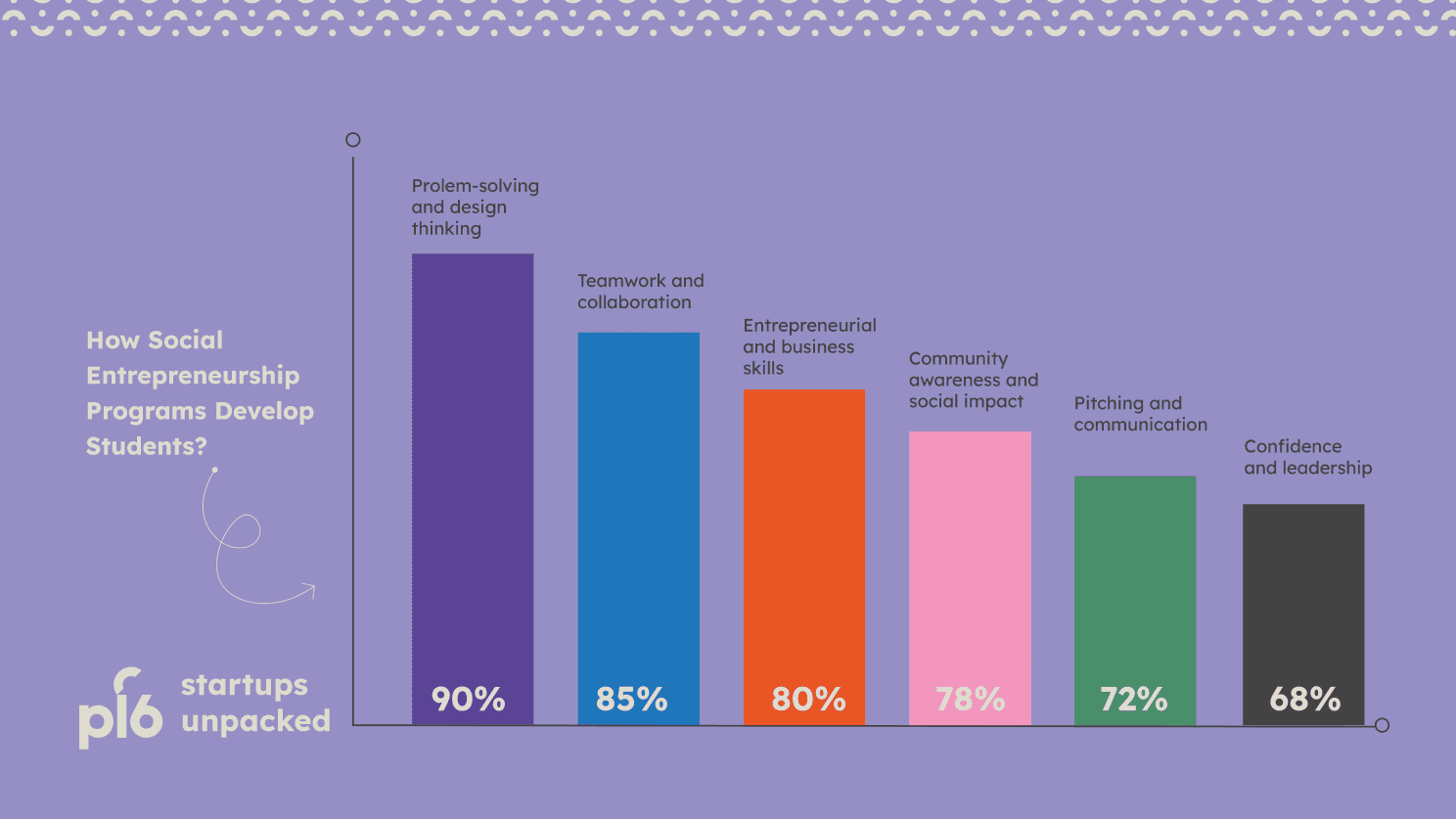
Learning the entrepreneurial way boosts creativity, critical thinking, and the ability to work through uncertainty. As UNESCO-UNEVOC points out, these are "transferable skills" the kind of tools that help young people thrive in a fast-changing job market while growing as individuals.
When students jump into a community project, they learn how to:
Understand a problem before proposing a solution
Conduct interviews and interpret feedback
Collaborate with people from different backgrounds
Communicate an idea clearly and persuasively
Test a concept without becoming overly attached to it
Balance impact, feasibility, and financial sustainability
Respond constructively when an idea does not work
These skills are gold, whether they start their own thing, join a big company, work in government, or lead a local nonprofit.
Social entrepreneurship education isn't just about finding a job. It's about being the kind of person who creates value wherever they land.
Closing the Gap Between Ambition and Action
A lot of young people are excited about the idea of being an entrepreneur, but getting started is the hard part.
Take OECD data, for example: while 39% of young people in the EU said they’d love to be self-employed, only 7% actually were in 2022. Even if the numbers differ in the MENA region, the point is the same: the interest is there, but many feel they lack the experience, the network, or the confidence to take that first step.
That’s why campus programs are such a big deal.
They provide a "safe space" to experiment without the massive risks of the real business world. Students can try an idea, get feedback, learn from what didn't work, and try again.
It turns "entrepreneurship" from a scary, abstract dream into a process they actually know how to handle.
Why Social Entrepreneurship Matters in the Region
Saudi Arabia and the rest of the region have unique, local challenges that need local solutions.
Whether it's healthcare, education, the environment, or food security, these aren't just "topics" for students, they're things they see every day in their own families and cities.
That personal connection is a superpower. A student might see a detail that a big institution would miss.
With the right support, that insight can turn into a product, a campaign, or a sustainable business.
Youth-led social enterprises solve problems and create jobs at the same time. But let’s be real: young founders face extra hurdles like lack of funding or credibility.
So, we can’t just tell them to "be innovative" and walk away. They need a clear path to follow.
Sahem: Turning Student Potential into Action
The Sahem Program is a great example of how parachute16 brings social entrepreneurship to life for students.
It’s not just sitting in a classroom. Students learn design thinking and business models by actually working together to solve real community needs.
During the program's hackathon, things get intense. They research, collaborate, pivot, and eventually pitch their solutions to a jury of experts.
The pitch is the exciting finale, but the real work happens behind the scenes.
That's where they learn to listen to their team, back up their ideas with facts, handle feedback, and work against the clock.
Sahem shows us that helping a community and helping a student grow are one and the same. The process of building a solution builds a more confident, aware young leader.
Universities as Ecosystem Connectors
Of course, universities can't do this alone.
To make a real impact, they need to team up with government, businesses, investors, and mentors.
These partnerships give students access to the expertise and resources they need to take their ideas beyond the classroom.
Companies can offer mentorship, while government entities can align student ideas with national goals. Investors and incubators can then step in to help the most promising projects grow.
Ecosystem builders are the ones who connect all these dots, turning random projects into structured opportunities.
When everyone works together, students aren't just doing a class assignment—they're joining a network that helps their ideas actually happen.
The Future Starts Before Graduation
The future of entrepreneurship doesn't start after graduation day.
It starts much earlier.
It starts the moment a student looks at a problem and thinks, "How can I fix this?" instead of just "That's too bad." It grows when they get the space and mentorship to test those thoughts out.
By supporting these programs, universities develop more than just founders; they develop thoughtful, active citizens and collaborative leaders.
The next big community solution is probably being discussed right now in a lecture hall or over coffee after class.
The future starts on campus, and our job is to help students build it.